Monday, May 14, 2012

#29

Well, after a smashing start to my quest to visit all of the Governors of Tennessee, my initial furious pace has, understandably slowed. There are many reasons for this...now that I have visited all of the Governors that are close to me I am now having to plan full or half day trips in order to visit the remainder..several of them are so far out that I need to plan a weekend trip. Also, we are just now coming out of the winter and road trips to graveyards tend to slow in favor of inside (heated) activities. Having said all of that, I, along with Major and Effrin, were recently able to visit the last of the Governors buried in the  Middle Tennessee area, in Murfreesboro on a beautiful yet chilly April day.

Unfortunately, this will likely be one of the only Governors that I will visit anytime soon, as I am in the throes of finalizing plans with Effrin for our next DPT (Dead President's Trip), where we will be traveling 27 hours in a little less than 3 full days and will be visiting: 8 Presidents, 5 Vice Presidents and a sundry of other historical and otherwise notable individuals. A full report of that trip will be posted as quickly as possible upon my return.

Until then here's one to tide you all over....


#29
Name: James Price Buchanan
Birth: 24 October 1847
Death: 14 May 1930
Age at Death: 82 years, 6 months, 21 days
Interment: Evergreen Cemetery, Murfreesboro, TN
Term in Office: January 19, 1891 – January 16, 1893
Political Party: Farm Labor

John Price Buchanan was born on October 24, 1847 in Williamson County.  Following the Civil War, during which Buchanan fought on the side of the Confederacy, he would move to Rutherford County and operate a large farm there. Holding public office in the House or Representatives he would also serve as the President of the Tennessee Farmer’s Alliance and Laborer’s Union. It was based on connections made through this position that Buchanan would be able to propel himself into the State’s highest office in 1890.  Entering office hoping to bring relief to Farmers, Buchanan would instead spend much of his Governorship dealing with armed uprising of Coal Miners in East Tennessee, who were upset over the prisoner work release program , which they saw as a threat to their jobs. Struggling between his support of Labor and his job to enforce Government contracts, Buchanan would lose the support of the Labor Unions and of the Democratic Party, who would nominate Peter Turney in the 1892 election.  Buchanan would run as a third party candidate but only garner 10% of the vote. Under his tenure, however, the state would implement a Confederate Pension Program, as well as, state-supported secondary schools. Following his time in office, he would return to his farm and spend the rest of his life there dying on May 14, 1930.


Bonus Major Pictures:


Monday, March 19, 2012

Where I'm from....


When I was 15, I was convinced I was either a punk or a goth or a metal head...anything but a country boy…I would listen to anything provided it wasn't country music.  I would take the occasional side trip into some Hank Williams (senior, of course) but for the most part I rejected all things Nashville.  I guess, a big thing was being surrounded by it…Country Music Hall of Fame, the Ryman and the Grand Ole Opry were all with-in fifteen minutes of my house, yet I considered myself completely separated from it all.

Looking back on it now I realize how silly that was but at the time I couldn’t be swayed otherwise and so much of my youth was spent denying my regional music roots.  As I have grown older, I have come to appreciate (almost) everything Nashville represents. I am proud that a good portion of the birth of popular music took place here and that when many a singer/songwriter has a dream they don’t look to the north or to the west coast but pack up everything they have and move to Nashville in hopes of being the next big thing. 

I have also embraced the artists that at one point I would’ve hate…everyone from Faron Young to Steve Earle to Miranda Lambert find a regular place in my music queue and I love them all. 
 
So recently I have started making an effort to see as many of the famous country singers/songwriters who have left this mortal coils graves as possible…I will, from time to time, post pictures from these trips and a little information and a music video about for the artists that I visit. 

 Name: Roy Acuff
Birth: 15 September 1903
Death: 23 November 1992
Age at Death: 89 years, 2 months and 8 days old
Interment: Spring Hill Cemetery, Nashville, TN
Occupation: Singer, Songwriter, co-owner of famed Nashville Publishing Company Acuff-Rose


 Name: Fred Rose
Birth: 24 August 1898
Death: 1 December 1954
Age at Death: 57 years, 3 months and 7 days old
Interment: Mt. Olivet Cemetery, Nashville, TN
Occupation: Songwriter, co-owner of famed Nashville Publishing Company Acuff-Rose


Name: Jimmy Martin
Birth: 10 August 1927
Death: 14 May 2005
Age at Death: 77 years, 9 months and 5 days old
Interment: Spring Hill Cemetery, Nashville, TN
Occupation: Bluegrass Musician, nicknamed the "King of Bluegrass"


Name: Hank Snow
Birth: 9 May 1914
Death: 20 December 1999
Age at Death: 85 years, 7 months and 11 days old
Interment: Spring Hill Cemetery, Nashville, TN
Occupation: Singer, Songwriter


Name: Pete Drake
Birth: 8 October 1932
Death: 29 July 1988
Age at Death: 55 years, 9 months and 21 days old
Interment: Spring Hill Cemetery, Nashville, TN
Occupation: Record Producer, Steel Guitar Player


Name: Billy Walker
Birth: 14 January 1929
Death: 21 May 2006
Age at Death: 77 years, 4 months and 8 days old
Interment: Spring Hill Cemetery, Nashville, TN
Occupation: Singer, Songwriter


Name:Vern Gosdin
Birth: 5 August 1934
Death: 28 April 2009
Age at Death: 74 years, 8 months and 24 days old
Interment: Mt. Olivet Cemetery, Nashville, TN
Occupation: Singer, Songwriter, nicknamed "The Voice"


Name: Keith Whitley
Birth: 1 July 1954
Death: 9 May 1989
Age at Death: 34 years, 10 months and 8 days old
Interment: Spring Hill Cemetery, Nashville, TN
Occupation: Singer, Songwriter


Friday, January 6, 2012

The Great Atlanta Trip 2011: Visiting Jimmy Carter, Martin Luther King, Ellen Wilson and James Frazier


 Four hours in a car is a long time for anyone….especially a one year old….but Major was a total champ and as we pulled into the parking lot of the Jimmy Carter Library and Museum in Atlanta, Georgia, I was excited that he and Amber were both there with me and was anxious to get inside and take in the life and career of our 39th President. 

After the trip to see Santa, Major was ready to get out of town for a while as well
 A few days before, Amber and I had decided that we needed to get away for a day. We both had time off over the holidays and, as you tend to do when you have time off, we had filled the bulk of it with the mundane tasks of home ownership and the joyous to and fro of Christmas, both of which had left us completely tired.  Christmas with Major was absolutely fantastic and we decided that the good times needed to continue rolling and what better way to do that than with a last minute, ill conceived, poorly planned road trip?! 
IKEA Atlanta

 Living in Nashville, we are with-in easy driving distance of Memphis, Atlanta, Louisville, Chattanooga, and Knoxville but only one of these has the ultimate draw for Amber, IKEA.  So with little discussion, I was online booking a hotel in Atlanta.  Being a tad bit into History, I, of course, knew that not only was Jimmy Carter’s Library located in Downtown Atlanta but that the Martin Luther King tomb, museum and Ebenezer Baptist Church were all there as well, and after just a minute of research I discovered that they were located less than two miles apart.  I also began looking at Tennessee’s Governors that might be buried along our path and discovered one in Chattanooga, which you pass through on your way to Atlanta. So between my history sites and Amber’s trip to IKEA and the hotel booked we were ready to roll…….until Major came down with a little bug and we had to cancel the hotel and instead make a trip to the pediatrician’s office. Four days later, with Major fully recovered and ready to rock again we rebooked our hotel and we were on our way….

Major and I outside of the Carter Library & Museum
 
The Jimmy Carter Library and Museum is located just outside of downtown Atlanta in what appears to be a quiet little neighborhood.  Having visited 4 other Presidential Libraries and Museums, I have to say that the Carter location is a bit underwhelming, not to say it isn’t good, but Carter’s administration in comparisons to those of Truman, Eisenhower, Regan and even Nixon, just isn’t that interesting. Having said that I would highly recommend anyone visit that might be in the area or interested in the lives and/or careers of the Presidents.  A large percentage of the Museum is dedicated to Carter’s post-presidency life, which has been, arguably, much more impressive than his political career and has seen him win the Nobel Peace Prize, which is on display at the end of the museum tour.  You walk away from the library with a deep sense that Carter is, as he portrayed himself in his campaigns, a fine, decent, admirable and honest man. 
Tomb of Martin Luther King, Jr, and Coretta Scott King
 The Martin Luther King, Jr. Historical Sites are a very short drive from the Carter Museum and include a Museum, Birth Home, Center for Non-Violent Social Change, Ebenezer Baptist Church and the final resting place of King and his wife, Coretta Scott King.  Being short on time we decided to head straight for the tombs, in order to insure that we had time to take it in properly. Having been to the final resting places of many of this nation’s greatest leaders, I have to say that standing at the tomb of Martin Luther King, a feeling of standing near greatness came over me that I have rarely felt before. The same can be said for the very well preserved Ebenezer Baptist Church, where King ‘s father was pastor and where he was baptized, preached his first sermon and was, until his death, co-pastor. 
Eternal Flame located near the King Tomb
 After a trip to IKEA and a good night’s sleep we were up and ready to head home the next day.  For the trip home I had planned two stops:
View from the top at Myrtle Hill Cemetery, Rome, GA
The first was in Rome, GA, to visit Myrtle Hill Cemetery, which is the final resting place of Woodrow Wilson’s first wife and for a little over a year of his term the First Lady of the United States, Ellen Wilson.  Of all of the cemeteries I have ever visited, Myrtle Hill is easily one of the most amazing as the whole of the cemetery sits on a very steep hill. While Woodrow is buried in D.C. with his second wife, Ellen rests next to her father and other kin in a very serene peaceful plot. 
Ellen Wilson's Grave
The last stop on our journey was to Forest Hills Cemetery located just outside of downtown Chattanooga and is the final resting place of James B. Frazier, the 33rd Governor of Tennessee, and my 24th Governor visit of the year.  Interestingly, I had been to Forest Hills Cemetery just four years earlier when my great uncle, Dudley Merritt, was laid to rest there. 


#33
 Name: James Beriah Frazier
Birth: 18 October 1856
Death: 28 March 1937
Age at Death:
80 years, 5 months and 10 days old
Interment: Forest Hills Cemetery, Chattanooga, TN
Term in Office: January 19, 1903 – March 21, 1905
Political Party: Democrat

James Beriah Frazier was born on October 18, 1956 in Bledsoe County, TN.  Graduating from the University of Tennessee at the age of 21, he would be admitted into the bar in 1881, and open a law practice in Chattanooga.  In 1902, he was elected Governor, and would be greatly admired for the strides he would make in improving education and for working to regulate mining in order to make it safer for workers. Reelected in 1904, he would only serve a few months of his second term before the death of former Governor, William Bate, who would leave an open seat in the United States Senate, where he was serving at the time of his death. Frazier would retire the governorship in order to take this vacated seat and would serve there until 1911.  Following his time in the senate, he returned to Chattanooga where he would continue to practice law until his death in 1937.

Monday, December 12, 2011

Andrew Johnson and 2011 a year in review


As 2011 begins to wind down and I have had time to reflect a little on the past nearly 365 days, I am astonished by all that has happened.  The beginning of 2011 started off with me planning on making one Presidential trip (to LBJs Ranch and Grave) and the Governor’s Blog wasn’t even on the radar and now here I sit having visited 6 Presidents and 19 Governors (I hope to visit one more to make it an even number before the end of the year). My journey has taken me to five different states and over a dozen small towns in Tennessee that until now I never had a reason to visit. 
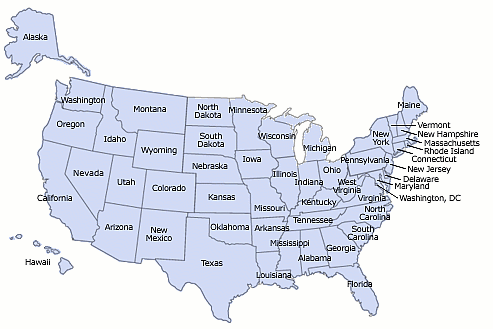
From the eastern most visit to Teddy Roosevelt’s Sagamore Hill in Oyster Bay, NY to western most  visit to Ronald Reagan’s Presidential Library in Simi Valley, CA is an expanse of 2862 miles…in between these two locations I visited Andrew Johnson in Greenville, TN,  Harry Truman in Independence, MO, and Eisenhower in Abilene Kansas, Lyndon Johnson in  Stonewall, TX and   Richard Nixon in Yorba Linda, CA.
The view from the Reagan Library
I saw an alien head in Lebanon, TN, while visiting William Campbell, and the birthplace of Nathan Bedford Forrest, on my way to visit Prentice Cooper in Shelbyville.  After many attempts to contact the land owner, I snuck into the cemetery of Newton Cannon to snap a few shots of his grave in Eagleville and saw the first private grave monitored by an alarm system  I have ever seen while visiting Austin Peay and Willie Blount in Clarksville, TN. 
Newton Cannon Cemetery
These experiences have been shared with some the most important people in my life.  Amber and Major were with me in Knoxville as we trudged up and down the hilly downtown looking for the Old County Court House, which is the final resting place of John Sevier.  While on a family vacation to my aunt and uncle’s place, my dad and my nephew, Will, took time out to travel with me through the hills of East Tennessee, seeing views that were truly breathtaking, own our way to Greeneville to visit former Governor and President, Andrew Johnson.  Effrin and I took our first plane trips together to both Kansas City and Los Angeles and visited a total of four former Presidents.  William and I traveled to five different cities and knocked out an astonishing six governors in one day. All of these experiences meant so much to me and brought me even closer to the people in this world that I love and respect most. 
Major's ready to roll...
You see, that is what each of these trips truly is, an experience, to be shared and remembered and each name I check off of the list brings with it experiences and memories that will last a lifetime. It is the laughs and the struggles, the time spent driving and wandering the cemeteries looking for graves, the places we eat and the weird little side trips we take, that makes each visit special and unique and what I crave more than anything. So, thank you all, thank you for reading, thank you for participating and if you’re ever feeling the need to visit a graveyard be sure and let me know and I will be there with camera in hand ready to make new memories with you.

#18 & #20

Name: Andrew Johnson
Birth: 29 December 1808
Death: 31 July 1875
Age at Death: 66 years, 7 months, 2 days old
Interment: Andrew Johnson National Cemetery
Term in Office: October 17, 1853 – November 3, 1857 & March 12, 1862 – March 4, 1865
Political Party: Democratic & Unionist/Military Governor

Andrew Johnson was born on December 29, 1808, in Raleigh, NC, to Jacob and Mary Johnson.  Following the death of his father, he would move with his mother and stepfather to Greeneville, TN, in 1826. Entering into an apprenticeship, as a tailor, he would open eventually open his ownsuccessful shop. The year after moving to Greeneville, he would meet and marry his wife, Eliza McCardle, with whom he would have five children. He would first be elected to the State Legislature and then the State Senate and finally as a congressman in the U.S. House of Representatives.  He would serve in the House of Representatives for ten years before being elected as the Governor of Tennessee, a post which he would hold for two consecutive terms. Following his terms as Governor he would next be elected to the U.S. Senate and would serve there until Tennessee seceded from the Union on June 8, 1861.  A strong proponent of the Constitution of the United States, Johnson viewed secession as unconstitutional and would be the only Senator from a seceding state to continue serving during the Civil War. In 1862, Lincoln would call upon Johnson to serve as the Military Governor of the State of Tennessee for the duration of the War.  In the election of 1864, Lincoln would again call upon Johnson to be his running mate.  A little over a month after his inauguration as Vice President, Johnson would be thrust into the role of President following the assassination of Lincoln. As President, Johnson would offer amnesty for the rebelling southern states and much of the confederate government.  He would also become one of only two Presidents to be impeached and was only one vote shy of being convicted.  Following his term as President, Johnson would run for and eventually be reelected to the U.S. Senate, the only former President to do so.  He would die on July 31, 1875, in Elzabethton, TN.  According to his wishes he was buried in Greeneville, TN,   his body being wrapped in an American flag and his head laid upon a copy of the Constitution. 

Wednesday, November 23, 2011

1000 words: Visiting Austin Peay & Willie Blount

Confederate Memorial, Greenwood Cemetery, Clarksville, TN
Paying respects to Willie Blount

Blackhorse Pub & Brewery, Clarksville, TN
My Great Great Grandparents Grave, Red River Cemetery, Adams, TN
Effrin & Major, Bellwood Cemetery, Adams, TN
 Name: Willie Blount
Birth: 18 April 1768
Death: 10 September 1835
Age at Death: 67 years, 4 months, 23 days
Interment: Greenwood Cemetery, Clarksville, TN
Term in Office: September 20, 1809 – September 27, 1815
Political Party: Democratic Republican

Willie Blount was born on April 18, 1768, in North Carolina to Jacob and Hannah Baker Blount, making him the half-brother to former Tennessee Governor William Blount.  Willie would go on to study at both Columbia and Princeton and be admitted to the bar in North Carolina. In 1796, after Tennessee was admitted as a state, Willie would serve as one of the states first judges. At this time he would also serve as a cabinet member for his half-brother. In 1809, he was elected governor and would serve three successive terms. During his term he would offer the state’s support in the War of 1812 as well as send troops into neighboring Mississippi to help defend against attacks by Native Americans. Following his terms as governor, Willie would remain active in politics and attend the Tennessee State Constitutional Convention of 1834, as a representative from Montgomery County, TN.  He would die on September 10, 1835 in Clarksville, TN. 


#40

 Name: Austin Peay
Birth: 1 June 1876
Death: 2 October 1927
Age at Death: 54 years, 4 months, 1 day
Interment: Greenwood Cemetery, Clarksville, TN
Term in Office: January 16, 1923 – October 3, 1927
Political Party: Democratic
 
Austin Peay was born on June 1, 1876, in Hopkinsville, KY, to former Confederate Calvaryman, Austin Peay, Sr., and his wife, Cornelia Leavell Peay. After briefly attending Washington and Lee University in Lexington, VA, Austin would graduate from Centre College in Danville, Ky.  Graduating from college at the age of 19, Austin would marry Sally Hurst with whom he would have two children. For the next six years he would work at his law practice until being elected to the Tennessee’s House of Representatives to represent Montgomery County. Running on a platform stressing tax reform, improved education and finishing the state highway system he was elected as governor in 1922. His term would see the creation of different state bureaus leading to the consolidation of state government, which in conjunction with reforms to the tax code would result in the elimination of all of the state's debt. It was also during his governorship that the state would prosecute John Thomas Scope for teaching the theory of evolution in public schools.  The trial, which would become known as the Scopes Monkey Trial, would bring national attention to the issue of religion vs. science as taught in public schools.  Scopes would be prosecuted but the decision would ultimately be overturned due to a technicality. In declining health, Austin would be reelected to his third term in 1926, and after a protracted battle with the legislature over funding of his school programs, would die while still in office on October 2, 1927, with many people blaming his death directly on stress caused by the legislature. Austin Peay is the only governor of Tennessee to have died while in office.  In 1929, a school in his adopted home city of Clarksville, TN, was named in his honor.