In August of 2011, I decided to take it upon myself to visit all forty-six graves of the former Tennessee Governors. This is the story of those men and the adventures I have finding them.
Four hours in a car is a long time for anyone….especially a
one year old….but Major was a total champ and as we pulled into the parking lot
of the Jimmy Carter Library and Museum in Atlanta, Georgia, I was excited that
he and Amber were both there with me and was anxious to get inside and take in
the life and career of our 39th President.
After the trip to see Santa, Major was ready to get out of town for a while as well
A few days before, Amber and I had decided that we needed to
get away for a day. We both had time off over the holidays and, as you tend to
do when you have time off, we had filled the bulk of it with the mundane tasks
of home ownership and the joyous to and fro of Christmas, both of which had left
us completely tired.Christmas with
Major was absolutely fantastic and we decided that the good times needed to
continue rolling and what better way to do that than with a last minute, ill
conceived, poorly planned road trip?!
IKEA Atlanta
Living in Nashville, we are with-in easy driving distance of
Memphis, Atlanta, Louisville, Chattanooga, and Knoxville but only one of these
has the ultimate draw for Amber, IKEA.So with little discussion, I was online booking a hotel in Atlanta.Being a tad bit into History, I, of course,
knew that not only was Jimmy Carter’s Library located in Downtown Atlanta but
that the Martin Luther King tomb, museum and Ebenezer Baptist Church were all
there as well, and after just a minute of research I discovered that they were
located less than two miles apart.I
also began looking at Tennessee’s Governors that might be buried along our path
and discovered one in Chattanooga, which you pass through on your way to
Atlanta. So between my history sites and Amber’s trip to IKEA and the hotel booked
we were ready to roll…….until Major came down with a little bug and we had to
cancel the hotel and instead make a trip to the pediatrician’s office. Four
days later, with Major fully recovered and ready to rock again we rebooked our
hotel and we were on our way….
Major and I outside of the Carter Library & Museum
The Jimmy Carter Library and Museum is located just outside
of downtown Atlanta in what appears to be a quiet little neighborhood.Having visited 4 other Presidential Libraries
and Museums, I have to say that the Carter location is a bit underwhelming, not
to say it isn’t good, but Carter’s administration in comparisons to those of
Truman, Eisenhower, Regan and even Nixon, just isn’t that interesting. Having
said that I would highly recommend anyone visit that might be in the area or
interested in the lives and/or careers of the Presidents.A large percentage of the Museum is dedicated
to Carter’s post-presidency life, which has been, arguably, much more
impressive than his political career and has seen him win the Nobel Peace Prize,
which is on display at the end of the museum tour.You walk away from the library with a deep
sense that Carter is, as he portrayed himself in his campaigns, a fine, decent,
admirable and honest man.
Tomb of Martin Luther King, Jr, and Coretta Scott King
The Martin Luther King, Jr. Historical Sites are a very
short drive from the Carter Museum and include a Museum, Birth Home, Center for
Non-Violent Social Change, Ebenezer Baptist Church and the final resting place
of King and his wife, Coretta Scott King.Being short on time we decided to head straight for the tombs, in order
to insure that we had time to take it in properly. Having been to the final
resting places of many of this nation’s greatest leaders, I have to say that
standing at the tomb of Martin Luther King, a feeling of standing near
greatness came over me that I have rarely felt before. The same can be said for
the very well preserved Ebenezer Baptist Church, where King ‘s father was
pastor and where he was baptized, preached his first sermon and was, until his death,
co-pastor.
Eternal Flame located near the King Tomb
After a trip to IKEA and a good night’s sleep we were up and
ready to head home the next day.For the
trip home I had planned two stops:
View from the top at Myrtle Hill Cemetery, Rome, GA
The first was in Rome, GA, to visit Myrtle Hill Cemetery,
which is the final resting place of Woodrow Wilson’s first wife and for a little over a year of his term the First Lady of the United States, Ellen
Wilson.Of all of the cemeteries I have
ever visited, Myrtle Hill is easily one of the most amazing as the whole of the
cemetery sits on a very steep hill. While Woodrow is buried in D.C. with his
second wife, Ellen rests next to her father and other kin in a very serene
peaceful plot.
Ellen Wilson's Grave
The last stop on our journey was to Forest Hills Cemetery
located just outside of downtown Chattanooga and is the final resting place of
James B. Frazier, the 33rd Governor of Tennessee, and my 24th
Governor visit of the year.Interestingly,
I had been to Forest Hills Cemetery just four years earlier when my great
uncle, Dudley Merritt, was laid to rest there.
#33
Name: James Beriah Frazier
Birth: 18 October 1856
Death:
28 March 1937 Age at Death: 80
years, 5 months and 10 days old
Interment:
Forest Hills Cemetery, Chattanooga,
TN
Term
in Office:January 19, 1903 – March 21, 1905
Political
Party: Democrat
James Beriah Frazier was born on October 18, 1956 in
Bledsoe County, TN.Graduating from the
University of Tennessee at the age of 21, he would be admitted into the bar in
1881, and open a law practice in Chattanooga.In 1902, he was elected Governor, and would be greatly admired for the
strides he would make in improving education and for working to regulate mining
in order to make it safer for workers. Reelected in 1904, he would only serve a
few months of his second term before the death of former Governor, William Bate,
who would leave an open seat in the United States Senate, where he was serving
at the time of his death. Frazier would retire the governorship in order to
take this vacated seat and would serve there until 1911.Following his time in the senate, he returned
to Chattanooga where he would continue to practice law until his death in 1937.
As 2011 begins to wind down and I have had time to reflect a
little on the past nearly 365 days, I am astonished by all that has happened. The beginning of 2011 started
off with me planning on making one Presidential trip (to LBJs Ranch and Grave)
and the Governor’s Blog wasn’t even on the radar and now here I sit having
visited 6 Presidents and 19 Governors (I hope to visit one more to make it an
even number before the end of the year). My journey has taken me to five
different states and over a dozen small towns in Tennessee that until now I
never had a reason to visit.
From the eastern most visit to Teddy Roosevelt’s Sagamore
Hill in Oyster Bay, NY to western most visit
to Ronald Reagan’s Presidential Library in Simi Valley, CA is an expanse of
2862 miles…in between these two locations I visited Andrew Johnson in
Greenville, TN, Harry Truman in Independence,
MO, and Eisenhower in Abilene Kansas, Lyndon Johnson in Stonewall, TX and Richard Nixon in Yorba Linda, CA.
The view from the Reagan Library
I saw an alien head in Lebanon, TN, while visiting William
Campbell, and the birthplace of Nathan Bedford Forrest, on my way
to visit Prentice Cooper in Shelbyville.
After many attempts to contact the land owner, I snuck into the cemetery of
Newton Cannon to snap a few shots of his grave in Eagleville and saw the first
private grave monitored by an alarm system I have ever seen while visiting Austin Peay
and Willie Blount in Clarksville, TN.
Newton Cannon Cemetery
These experiences have been shared with some the most important people
in my life. Amber and Major were with me
in Knoxville as we trudged up and down the hilly downtown looking for the Old
County Court House, which is the final resting place of John Sevier. While on a family vacation to my aunt and
uncle’s place, my dad and my nephew, Will, took time out to travel with me
through the hills of East Tennessee, seeing views that were truly breathtaking,
own our way to Greeneville to visit former Governor and President, Andrew
Johnson. Effrin and I took our first
plane trips together to both Kansas City and Los Angeles and visited a total of
four former Presidents. William and I
traveled to five different cities and knocked out an astonishing six governors
in one day. All of these experiences meant so much to me and brought me even
closer to the people in this world that I love and respect most.
Major's ready to roll...
You see, that is what each of these trips truly is, an experience,
to be shared and remembered and each name I check off of the list brings with it
experiences and memories that will last a lifetime. It is the laughs and the
struggles, the time spent driving and wandering the cemeteries looking for graves, the places we eat and the weird little side trips we take, that makes each visit special and unique and what I crave more than
anything. So, thank you all, thank you for reading, thank you for participating
and if you’re ever feeling the need to visit a graveyard be sure and let me
know and I will be there with camera in hand ready to make new memories with
you.
#18 & #20
Name: Andrew Johnson
Birth:29 December 1808
Death: 31 July 1875 Age at Death: 66 years, 7 months, 2 days old
Interment:Andrew Johnson National Cemetery
Term in Office:October 17, 1853 – November 3, 1857 & March 12, 1862 – March 4, 1865
Political Party: Democratic & Unionist/Military Governor
Andrew Johnson was born on December 29, 1808, in Raleigh,
NC, to Jacob and Mary Johnson. Following
the death of his father, he would move with his mother and stepfather to
Greeneville, TN, in 1826. Entering into an apprenticeship, as a tailor, he would
open eventually open his ownsuccessful shop. The year after moving
to Greeneville, he would meet and marry his wife, Eliza McCardle, with whom he
would have five children. He would first be elected to the State Legislature
and then the State Senate and finally as a congressman in the U.S. House of
Representatives. He would serve in the
House of Representatives for ten years before being elected as the Governor of
Tennessee, a post which he would hold for two consecutive terms. Following his
terms as Governor he would next be elected to the U.S. Senate and would serve
there until Tennessee seceded from the Union on June 8, 1861. A strong proponent of the Constitution of the
United States, Johnson viewed secession as unconstitutional and would be the
only Senator from a seceding state to continue serving during the Civil War. In
1862, Lincoln would call upon Johnson to serve as the Military Governor of the
State of Tennessee for the duration of the War.
In the election of 1864, Lincoln would again call upon Johnson to be his
running mate. A little over a month
after his inauguration as Vice President, Johnson would be thrust into the role
of President following the assassination of Lincoln. As President, Johnson
would offer amnesty for the rebelling southern states and much of the
confederate government. He would also
become one of only two Presidents to be impeached and was only one vote shy of
being convicted. Following his term as President,
Johnson would run for and eventually be reelected to the U.S. Senate, the only
former President to do so. He would die
on July 31, 1875, in Elzabethton, TN.
According to his wishes he was buried in Greeneville, TN, his
body being wrapped in an American flag and his head laid upon a copy of the
Constitution.
Despite the fact that William and I saw a horse that had been hit by a car lying dead on the side of the road, which is something I can honestly say I had never seen before and hope and pray I never see again, I would have to say that the one thing from this particular trip that stands out in my head more than anything is: Country Johnny Mathis.
Now, admittedly, 90% of the graves that I ‘hunt’ are political or historical in nature but anytime I have a chance to visit a celebrity or anything of that nature, I rarely pass it by and thus was the case with Mr. Mathis. By the time we decided to visit Johnny, we had already seen five governors in four different cities and were on the tail end of what had been a fantastic day. Our first stop was Eagleville and the grave of Newton Cannon in a private family plot. The second was at the grave of Henry Horton, which is located in the park named in his honor, in Chapel Hill. Next we were off to Shelbyville and the grave of Prentice Cooper at an amazing little country church cemetery. From there it was onward to Lewisburg and the graves of both Buford Ellington and Jim McCord in Lewisburg.
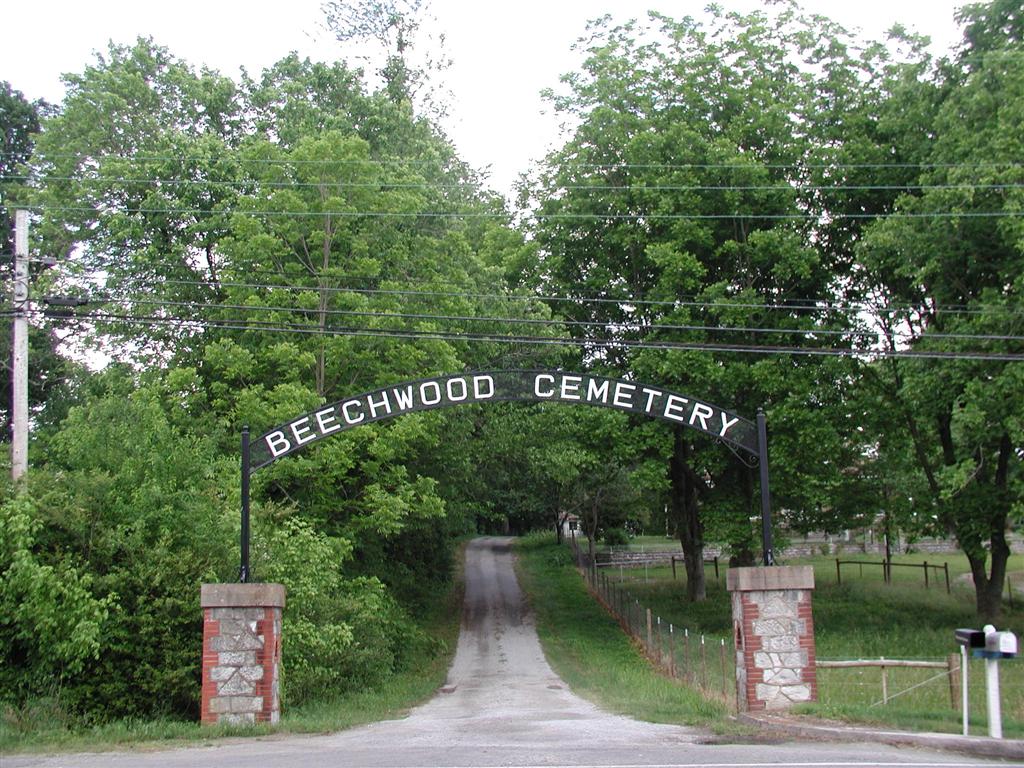
After leaving Lewisburg and heading towards Pulaski, and our final grave, we drove through the small town of Cornersville and a cemetery called Beechwood. Having plenty of time to kill, I jumped on my cellphone and decided to see if anyone of historical or celebrity note was buried there and much to our surprise a gentleman by the name of Johnny Mathis was interred here. Now, not many people are aware that there are TWO Johnny Mathis’ in entertainment…one, and easily the more famous, working in the pop world, and another, Country Johnny, not nearly as famous, working in the world of 1950s Country Western. Country Johnny was born in Maude County, Texas, in 1930 and made some waves on country music radio and had a few minor hits and wrote a few more for other country artists of the time, including the below track that George Jones recorded. Honestly, neither William nor myself were familiar with him, but decided that we should stop by and pay our respects.
Beechwood Cemetery is a very classic looking/feeling small town cemetery, and not having any idea what Johnny’s marker looked like, we decided to spend some time just wandering. It was amazing to see the generations of families that were buried here. From the early settlers of the area and participants in every war imaginable from the Revolutionary War onward. We wandered amongst the gravestones looking for a needle in the haystack, while taking it all in at the same time. Some of the tombstones were so badly damaged that they were illegible and decaying while a gravestone right next to it might be in mint condition.
This got me to thinking about the state of one of the governor’s graves that we visited, that of Newton Cannon, and how at one time he was one of the most important men in the state of Tennessee and now his earthly remains lie in a graveyard overrun with vines, weeds and bushes…essentially lost to all but a few. Sadly, this is the case often times, the people and names that change the course of one generation are lost to the next. Thus was the case with Newton and thus was the case with Country Johnny Mathis and so many more just like them.
The sign marking the general location of Newton's grave
After spending nearly an hour wandering the graveyard, we decided that we needed to give up the search in order to insure that we could make it to our final governor’s grave (John C. Brown) before the day got away from us. It wasn’t until we arrived home that William did a little more research and discovered that Country Johnny had only died a few short weeks before our visit and as such his grave wouldn’t have had a marker yet…we vowed then and there that we would return to Beechwood and pay our respects to a man that was largely unknown to us but loved by so many and that the next time we were there we’d proudly be listening to the music that was his legacy. So Country Johnny until we meet again, from William and myself, rest in peace.
#11
Name: Newton Cannon
Birth: 22 May 1781
Death: 16 September 1841 Age at Death: 60 years, 3 months, 25 days old
Interment: Newton Cannon Cemetery, Eagleville, TN
Term in Office: October 12, 1835 – October 14, 1839
Political Party: Whig
Newton Cannon was born on May 22, 1781 in Guilford County, NC . He would move with his family to Williamson County, TN at the age of nine. After school he entered into several different occupations before settling into his role as a farmer. His political career began in 1811, as a state senator. When the Creek War of 1813 broke out he enlisted in the army and served with distinction. It was around this time that his lifelong personal and political opposition to Andrew Jackson would begin. Newton would go on to oppose Andrew Jackson on nearly all of his political endeavors. Following the war he would again enter into politics this time serving in the United States House of Representatives. In 1819, at the request of then President James Monroe, Newton was sent to negotiate a peace treaty with the Chickasaw Indians. He continued his role as congressman until 1823, at which point he would return to Tennessee and resume his role as a farmer. First running for governor in 1827, he was defeated by Sam Houston. Running successfully for governor again in 1835, he would spend two consecutive terms as governor before being defeated by James K Polk, who had been called back to Tennessee by Andrew Jackson specifically for the task of taking on Newton for the governorship. He was married twice, first in 1813 to Leah Perkins, who died three short years later, and again to Rachel Wilborn, and would father a total of ten children. Newton passed away on September 16, 1841, and was laid to rest in a private family plot on his land in Rutherford County, TN.
#23
Name: John Calvin Brown
Birth: 6 January 1827
Death: 17 August 1889 Age at Death: 62 years, 7 months, 11 days old
Interment: Mapplewood Cemetery, Pulaski, TN
Term in Office: October 10, 1871 – January 18, 1875
Political Party: Democrat
John Calvin Brown was born in Giles County, TN, on January 6, 1827 to Duncan and Mary Brown . His elder brother, Neil S. Brown, was also a governor of Tennessee. He graduated from Jackson College in 1846 and established a law practice in the city of Pulaski, TN. As a Whig he opposed secession but in 1861 after the outbreak of the Civil War, Brown enlisted in the Confederate Army as a Private but was almost immediately elevated to the level of Colonel. On February 16, 1862, he was captured by the Union Army following the surrender of Fort Donelson and would spend the next eight months as a prisoner of war before being released as part of a prisoner exchange. Following his release he was promoted to the level of Brigadier General and served in the army of Braxton Bragg. He was wounded in the battles of Perryville, Chickamauga and again in Franklin and finally surrendering command of his division to Joseph Johnston in April, 1865. Entering into politics following the war he would first serve in the State Constitutional Convention, where he was elected President of the body. In 1870, he would successfully run for Governor of the State and would spend two terms in this position. Following his term as Governor he would unsuccessfully run for senate, losing to former president, Andrew Johnson. He would spend the next thirteen years working for the Texas and Pacific Railroad Company, eventually becoming its President. He would retire from this position in 1889 and die the same year of a stomach hemorrhage.
#41
Name: Henry H. Horton
Birth: 17 February 1866
Death: 2 July 1934 Age at Death: 68 years, 4 months and 15 days old
Interment: Wilhoite Cemetery, Chapel Hill, TN
Term in Office: October 3, 1927 – January 17, 1933
Political Party: Democrat
Henry Horton Hollis was born on February 17,1866, in Princeton, AL. Henry would begin his professional career as a teacher before being admitted into the bar in 1894. His first foray into politics would be in the Tennessee State Senate, where he would ultimately become Speaker. On October 2, 1927, based on the laws of Tennessee, as Speaker, Henry would become governor of the state following the death of the current governor, Austin Peay. Despite several individuals ascending to the governorship because of a vacated seat, Henry is the only individual to take over this position following the death of the current governor. During his term in office he would lower the Tennessee Property tax and increase the tax on cigarettes to fund education. In 1930, shortly following his election to his second term, Henry’s close friend and political backer, Luke Lea, was caught up in a bank scandal. While never formally charged with any wrongdoings, Henry’s administration was tied to this scandal and in 1932 he would not seek reelection. He would die on July 2, 1932 at his home in Chapel Hill, TN. Following his death his property along the Duck River was acquired by the state and a park named in his honor was established on this land.
#44
Name: Prentice Cooper
Birth: 22 September 1895
Death: 18 May 1969 Age at Death: 73 years, 7 months, 27 days old
Term in Office: January 16, 1939 – January 16, 1945
Political Party: Democrat
William Prentice Cooper, Jr., was born on September 28, 1895, to William Prentice and Argentine Cooper near Shelbyville, TN. He would attend both Vanderbilt and Princeton Universities and graduate with a Bachelor of Arts degree. In 1917, after the outbreak of World War I, he enlisted in the Army as a Private and would be leave the army in 1919 as a Second Lieutenant. In 1922, he was elected to the Tennessee House of Representatives and would serve in that position until being elected to Attorney General of the Eighth Judicial Circuit. 1937 would see yet another change of position for Prentice when he was elected to the Tennessee State Senate and would only serve here for one year before running for governor in 1938. The election was hard fought but Cooper, who had attracted the favor of Memphis Political boss, EH Crump, would go on to win. During his three terms as Governor, he would fight for education reforms and being the wartime governor, would help oversee the establishment of an atomic facility in Oak Ridge, where the atomic bomb was made, as well as a new military base at Fort Campbell. Following his terms as governor, he would be appointed as ambassador to Peru, where he would remain for two years. Following his return from Peru , he would marry Hortense Powell and father three children, including a current congressman from Tennessee, Jim Cooper. Returning to Shelbyville he would die at the Mayo Clinic in Rochester, MN, and be buried at Jenkins Chapel Cemetery.
#45
Name: Jim Nance McCord
Birth: 17 March 1879
Death: 2 September 1968 Age at Death: 89 years, 5 months, 16 days
Interment: Lone Oak Cemetery, Lewisburg, TN
Term in Office: January 16, 1945 – January 16, 1949
Political Party: Democrat
Jim Nance McCord was born on March 17, 1879, in Unionville, TN, to Thomas and Iva McCord. Following his graduation, McCord would spend the next ten years as a traveling salesman before moving into the newspaper industry in 1910, as Publisher of the Marshall Gazette. Elected as Mayor of Lewisburg in 1927, a position he would hold for thirteen consecutive terms until 1942, a position he would only leave after being elected to the United States Congress. He would only serve one term as Congressman before being elected as Governor of Tennessee on November 7, 1944. Recognized as a strong friend of education, he fought for pay raises for teachers and principals and even went as far as establishing a sales tax (of 2%) in order to fund education. Following his stint as governor he would serve in the administration of Governor Frank Clement as Commissioner of Conversation. Following the death of his first wife, Vera Kercheval, who he married in 1901 and who passed away in 1953, Jim would be married twice more before dying in Nashville on September 2, 1968.
#48
Name: Buford Ellington
Birth: 17 March 1879
Death: 2 September 1968 Age at Death: 64 years, 9 months and 7 days old
Interment: Lone Oak Cemetery, Lewisburg, TN
Term in Office: January 19, 1959 – January 15, 1963 & January 16, 1967 – January 16, 1971
Political Party: Democrat
Buford Ellington was born on June 27, 1907, in Holmes County, MS. He was originally a merchant and farmer before being pegged by then Governor Frank Clement . Following the end of Clement’s term limit, Buford would run successfully for Governor, the two would spend the next 12 years alternating the governorship and collectively hold the seat from 1953 until 1971. Much of the Civil Rights movement would take place during this time period and Buford would go from a moderate segregationist to a proponent for racial integration. He would also develop a close friendship and working relationship with President Lyndon Johnson and serve as a moderator in talks between Johnson and Alabama governor George Wallace during the Selma to Montgomery walks. After leaving office Buford would die two years later in Boca Raton, FL, on April 3, 1972, and be buried at Lone Oak Cemetery in Lewisburg, TN. Among the mourners at his funeral was a very frail looking Lyndon Johnson, who would pass away just a short eight months later.