I have several passions in life...obviously history is one...another is my family and friends and finally music. I've been a fanatical music fan as long as I can remember and honestly some of my earliest memories are tied to some song or another. I've been, and am, a fan of everything from Hank Williams to Kanye West, from Miranda Lambert to Minor Threat...There are, in fact, very few bands or artists that I can't find at least something that I enjoy.

Music has brought me great joy in life and been with me through the deaths of both of my grandmothers. When my Nanny died I couldn't stop listening to Juliana Hatfield's album Hey Babe, when my Mawmaw died it was Public Enemy It Takes A Nation of Millions to Hold Us Back...both strange choices but also both albums that I begged my grandmothers to take me to the mall to purchase and being the loving grandmothers that they were (are) they both happily obliged.
Minus the fact that she is beautiful, one of the first things that attracted me to Amber was the fact that she was a fan of the band Material Issue. When we got married we were obsessed with Elton John's song , "Tiny Dancer", and listened to it basically on repeat for days and when we found out she was pregnant with Major we became obsessed with the Mumford and Son song, "Timshel". Ask me any period in our relationship and chances are I can tell you what music we were listening to at that particular time.
Since the day Major came home from the hospital we have attempted to expose him to as much music as possible. One of the first days we were home I sat with him on the couch and listened to old country music all day. When he was upset, for whatever reason, The Decemberists calmed him and his love for the theme-song to The Simpsons was evident by his efforts to see the TV anytime the song was playing.
So to say that his first live music experience was important to us is an understatement. We toyed with taking him to see Steve Martin perform bluegrass this past summer, but decided against it for various reasons. It all clicked into place, however, when we found out that Yo Gabba Gabba was touring and playing in Knoxville, which is just a few hours from us. Ever since he was tiny he has loved Yo Gabba Gabba...he'll watch as Mark Mothersbaugh draws or Biz Markie does his beat of the day and dance anytime the Super Music Friend Show band performs.
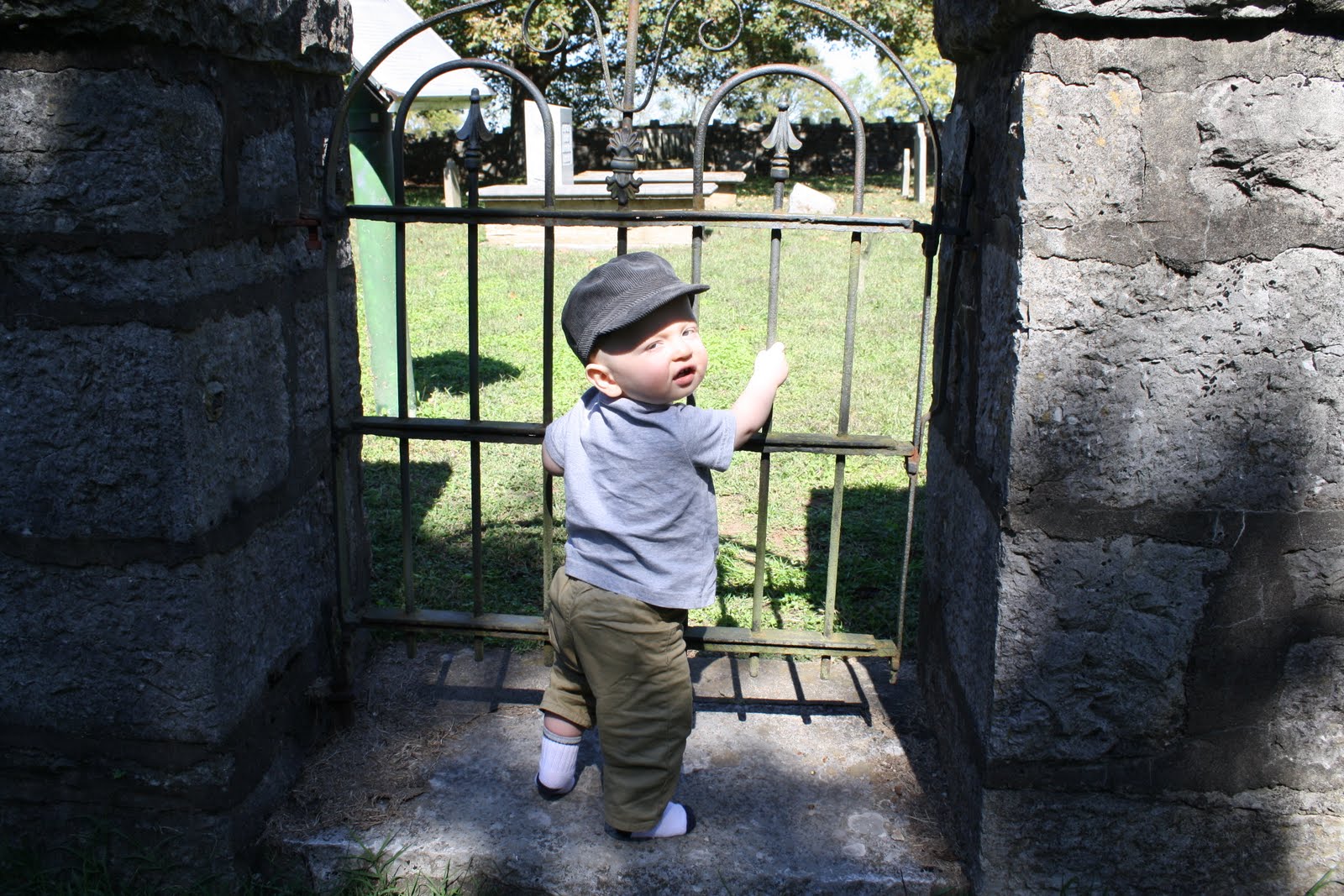
We weren't sure how to expect him to react to the whole live experience, but minus shear terror at the very beginning he was enthralled by the show and stared at the performers with a look of amazement on his face. Sitting there with him, I couldn't help but be thankful that I have such an amazing child and that he is growing up so beautifully. He seems to be developing a love for something that has been with me for so many years...a love of music that will hopefully bring him joy for his entire life...and I think that is all that any parent can really hope for at the end of the day is that their child is healthy and happy...for if they have those two things everything else will be okay.

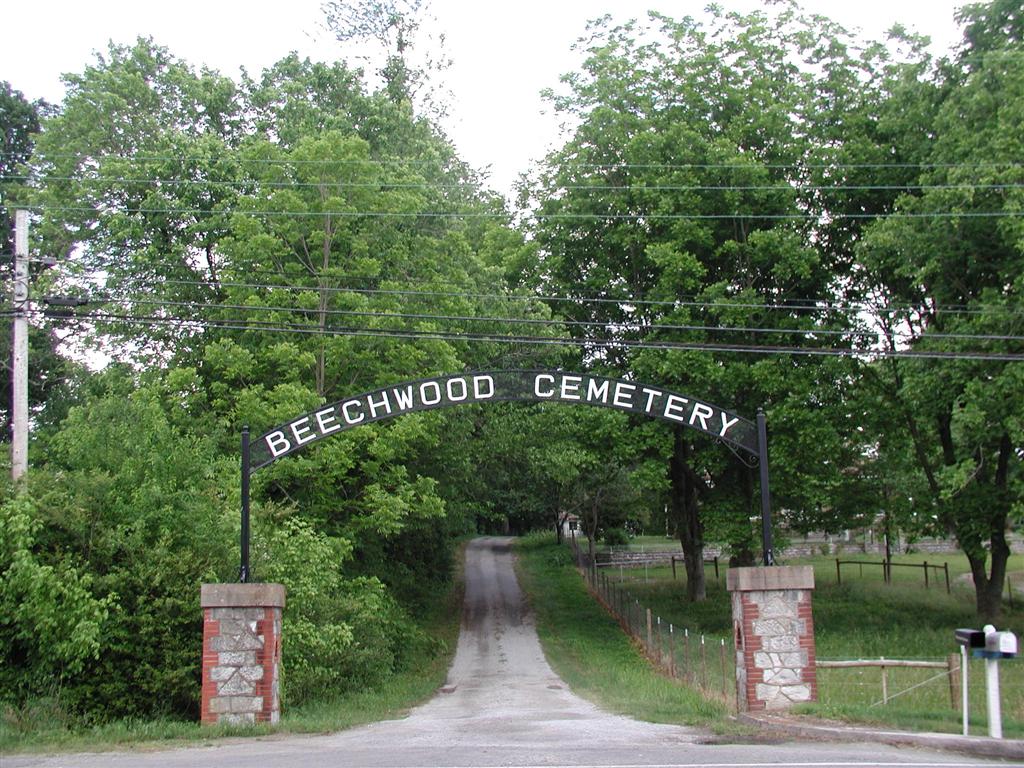
Oh and I also got to visit a few graves while we were in Knoxville.
#1

Name: William Blount
Birth: 26 March 1749
Death: 21 March 1800
Age at Death: 50 years, 11 months, 23 days
Age at Death: 50 years, 11 months, 23 days
Interment: First Presbyterian Church, Knoxville, TN
Term in Office: September 20, 1790 – March 30, 1796
(Technically served as Governor of the United States of America South of the River Ohio)
Political Party: Democratic Republican

In 1776, William entered into service in the Revolutionary War, serving as paymaster with several units fighting out of North Carolina. On February 12, 1778, William married Mary Grainger, with whom he would have six children. Following the war he would enter into the North Carolina House of Commons and as a delegate to the US Constitutional Convention and would be one of the signers of this document. In 1790, William was appointed as Governor of the Territory of the United States, South of the River Ohio, as well as superintendent of Indian Affairs, by then President George Washington. He would serve in these positions for six years, dealing with the early establishment of the region and issues with the local Indian Tribes. Following his term as governor of the region he would go on to serve as President of the Tennessee Constitutional Convention and be elected to serve in the United States Senate. On June 8, 1797, however, William would be expelled from the Senate because of his involvement in an affair involving an attack on Spanish Florida and Louisiana. Despite his expulsion from the U.S. Senate, William was elected to serve in the State Senate the following year and would also serve as Speaker of that body. Two years later, William died at his home in Knoxville on March 21, 1800.

#2
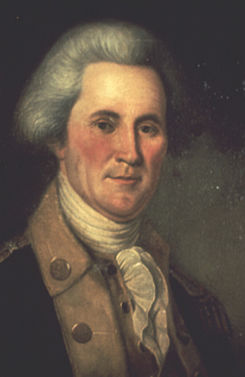
Name: John Sevier
Birth: 23 September 1745
Death: 24 September 1814
Age at Death: 70 years, 2 days
Age at Death: 70 years, 2 days
Interment: Old Knox County Courthouse
Term in Office: March 30, 1796 – September 23, 1801 & September 23, 1803 – September 20, 1809
Political Party: Democratic Republican

John Sevier was born in New Market, Virginia, on September 23, 1745. John would marry Sarah Hawkins in 1761 and move with his wife into the Holston settlement, which was located in what would become East Tennessee. At the onset of the Revolutionary War, John would work his way to the position of Colonel in a division that was known as the Overmountain Men, which was a division of men from West of the Appalachian Mountains. John would lead them in their greatest victory over loyalist fighters at the Battle of Kings Mountain. Following the war he would first serve as Governor of the ill-fated State of Franklin from 1785 until its dissolution in 1788. After this term he would serve as Brigadier-General in the Tennessee State Militia for five years. In March of 1796, he would be sat as the first Governor of Tennessee, which would be entered into the Union on June 1, 1796. He would serve a total of six years before having to step down due to the term limits set forth by the Tennessee Constitution. It was following his first term that his rivalry with Andrew Jackson, a supporter Archibald Roane, the man who won the governorship following Sevier. Their argument would almost come to the point of a duel, which was going to take place in Kingston, TN, but both men would walk away without firing a shot. Following Roane’s term as governor, John would again be elected as governor serving another six years. At the end of his next term, John would first serve two years in the Tennessee State Senate and then four years in the United States Congress. He would die in 1815, while surveying the boundary between the Creek Nation and the State of Georgia, first being interred at Fort Decataur his remains would later be moved to their current resting place on the grounds of the Old Knox County Courthouse.

#3


 William Gannaway Brownlow was born on August 29, 1805, in Wythe County , VA, and moved at a very early age to Eastern Tennessee. After the death of both of his parents in 1816, he was left to the care of his mother’s family. He would enter into the Methodist ministry in 1826 and spend the next ten years as a traveling minister, also known as a circuit rider. Following his marriage he would become editor first of the Tennessee Whig newspaper and then the Knoxville Whig. In 1861, after the outbreak of the Civil War, he refused to swear allegiance to the Confederate Government and would be forced into hiding near Cades Cove, TN. He would be captured and interred in a Confederate prison camp in Knoxville but be set free after his inhuman treatment suffered at the hands of his captors was exposed. Following his release he would spend time traveling the north drumming up support for the Unionists who were still in Knoxville. William would return to Knoxville following the cities occupation by the forces of Union commander, General Ambrose Burnside, and immediately reopen his newspaper under the name Knoxville Whig and Rebel Ventilator. He would be seated as governor following the seat being vacated by Andrew Johnson, due to the death of Abraham Lincoln, and go on to win the position outright in the next election. Under his governorship Tennessee would become the first state readmitted into the Union following the Civil War. In 1869, he would be elected to the United States Senate and serve there for the next six years. Retiring from the senate in 1875, William would die on April 28, 1877.

Name: Archibald Roane
Birth: circa 1759
Death: 18 January 1819
Age at Death: 59 or 60 years
Age at Death: 59 or 60 years
Interment: Pleasant Forest Cemetery, Farragut, TN
Term in Office: September 23, 1801 – September 23, 1803
Political Party: Democratic Republican
Political Party: Democratic Republican

Archibald Roane was born in Lancaster County, PA, sometime in 1759. After the death of both of his parents in 1767, Archibald was made a ward of his uncle John Roane, who was a Presbyterian Clergy man and saw to it that he received a good education. Sometime around the year 1780, he moved to Liberty Hall, VA, and married Ann Campbell. He was later admitted into the bar and set up practice in Jonesborugh and Greeneville, TN. In 1790, he was selected as the Attorney General for the Territory of the United States West of the River Ohio and would go on to be one of the original framers of the Tennessee Constitution. In 1801, he was elected Governor of Tennessee and would spend two years in this position, during which time he would deal with helping to define the border between Tennessee and Virginia. He would lose his reelection bid to John Sevier, after serving only one term. Following his time as governor he would return to practicing the law and serve as a Circuit Judge as well as on the Superior Court of Errors and Appeals until his death on January 18, 1819.

#21

Name: William Gannaway Brownlow
Birth: 29 August 1805
Death: 28 April 1877
Age at Death: 71 years, 8 months
Age at Death: 71 years, 8 months
Interment: Old Gray Cemetery, Knoxville, TN
Term in Office: April 5, 1865 – February 25, 1869
Political Party: Republican
Political Party: Republican
 William Gannaway Brownlow was born on August 29, 1805, in Wythe County , VA, and moved at a very early age to Eastern Tennessee. After the death of both of his parents in 1816, he was left to the care of his mother’s family. He would enter into the Methodist ministry in 1826 and spend the next ten years as a traveling minister, also known as a circuit rider. Following his marriage he would become editor first of the Tennessee Whig newspaper and then the Knoxville Whig. In 1861, after the outbreak of the Civil War, he refused to swear allegiance to the Confederate Government and would be forced into hiding near Cades Cove, TN. He would be captured and interred in a Confederate prison camp in Knoxville but be set free after his inhuman treatment suffered at the hands of his captors was exposed. Following his release he would spend time traveling the north drumming up support for the Unionists who were still in Knoxville. William would return to Knoxville following the cities occupation by the forces of Union commander, General Ambrose Burnside, and immediately reopen his newspaper under the name Knoxville Whig and Rebel Ventilator. He would be seated as governor following the seat being vacated by Andrew Johnson, due to the death of Abraham Lincoln, and go on to win the position outright in the next election. Under his governorship Tennessee would become the first state readmitted into the Union following the Civil War. In 1869, he would be elected to the United States Senate and serve there for the next six years. Retiring from the senate in 1875, William would die on April 28, 1877.